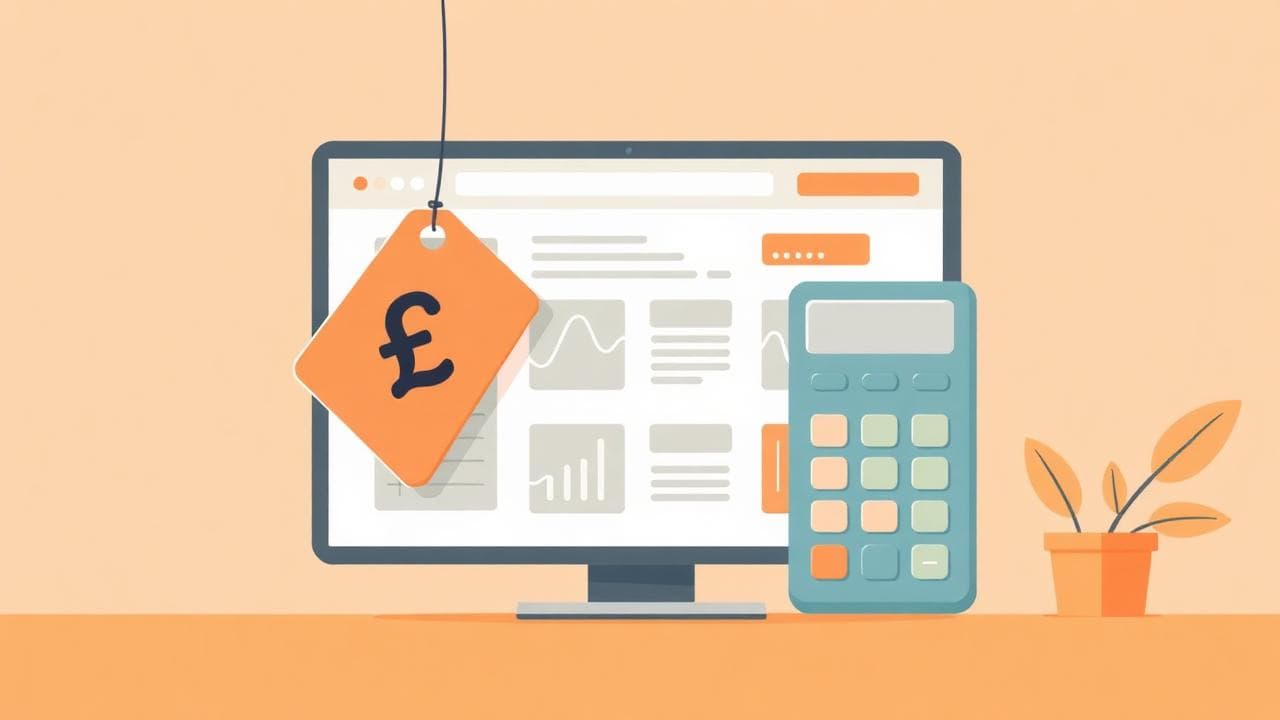
How much should a small business website cost?
This is one of the most common questions small business owners ask, and it is one of the hardest to get a straight answer on. Quotes range from free to 15,000 pounds or more, and it is difficult to know what is reasonable.
Here is an honest breakdown of what things actually cost and what you should expect for your money.
The short answer
For a typical small business — a tradesperson, a local shop, a salon, a clinic — a professional website should cost:
- One-off build: 500 to 3,000 pounds
- Monthly managed service: 35 to 100 pounds per month (includes hosting, updates, and often SEO)
- DIY website builder: 10 to 30 pounds per month (Wix, Squarespace, etc.)
If someone is quoting you 5,000 to 15,000 pounds for a standard small business website, they are either overcharging or building something far more complex than you need.
What affects the price?
Number of pages
A simple five-page website (home, about, services, gallery, contact) costs less than a 20-page site with individual service pages, a blog, and a resources section. For most small businesses, five to ten pages is plenty.
Custom design vs templates
A fully custom design where every element is created from scratch costs more than a website built on a professional template. Here is the thing most people do not realise: template-based websites can look just as professional as custom designs, and they cost a fraction of the price.
Unless you have very specific branding requirements, a well-chosen template customised with your colours, photos, and content will serve you perfectly well.
E-commerce
If you need to sell products online, costs go up. An e-commerce website with a product catalogue, shopping cart, and payment processing typically starts at 2,000 to 5,000 pounds. But if you are a service-based business — a plumber, a hairdresser, a personal trainer — you do not need e-commerce.
Ongoing maintenance
A website is not a set-and-forget thing. It needs hosting (the server space that keeps it online), security updates, plugin updates, and occasional content changes. Budget for 20 to 50 pounds per month for hosting and basic maintenance if you go the one-off build route.
SEO
Some web designers include basic SEO (making sure Google can find your site) in their price. Others charge extra. Always ask what SEO is included. A website that nobody can find on Google is a waste of money.
The different pricing models
Option 1: Pay a freelancer or agency for a one-off build
You pay a lump sum upfront (typically 500 to 3,000 pounds), and you own the website. You then pay separately for hosting and maintenance. This gives you full control, but you are responsible for keeping the site updated and working.
Best for: Businesses that want full ownership and are comfortable managing (or paying someone to manage) ongoing updates.
Option 2: Monthly managed website service
You pay a monthly fee (typically 35 to 100 pounds) that includes the website build, hosting, maintenance, and often SEO. There is usually no large upfront cost. The website is managed for you, so you do not need to worry about updates or technical issues.
Best for: Business owners who want a professional website without the hassle of managing it themselves.
Option 3: DIY website builder
Platforms like Wix, Squarespace, and WordPress.com let you build your own website for 10 to 30 pounds per month. They provide templates and drag-and-drop editors. The cost is low, but you are investing your own time, and the results depend on your design skills.
Best for: Very early-stage businesses on tight budgets who have time to learn a new tool.
What you should get for your money
Regardless of which option you choose, your website should include:
- Mobile-friendly design: It must work perfectly on phones and tablets
- Fast loading speed: Under three seconds, ideally under two
- SSL certificate: The padlock icon in the browser — essential for trust and Google rankings
- Basic SEO setup: Page titles, meta descriptions, heading structure, and local keywords
- Contact information: Phone number, email, and a working contact form
- Google Analytics: So you can see how many people visit your site and where they come from
If a web designer cannot confirm these basics are included, look elsewhere.
Red flags to watch for
- Quotes over 5,000 pounds for a simple business website: You are overpaying
- Long-term contracts: Avoid anyone locking you into a 12 or 24-month contract with no exit clause
- No mention of mobile or SEO: These are not optional extras, they are essentials
- Ownership restrictions: Make sure you own your content and can take your website elsewhere if you want to leave
- Hidden fees: Ask about hosting, domain renewal, SSL certificates, and content updates upfront
How to get the best value
- Know what you need: A five-page website with your services, photos, and contact details is enough for most small businesses
- Get three quotes: Compare not just price but what is included
- Ask to see examples: Look at websites they have built for similar businesses
- Check Google rankings: Do their other clients' websites actually show up on Google? If not, their SEO is not working
- Read reviews: Check Google reviews and ask for references from previous clients
The bottom line
A good small business website does not need to cost thousands of pounds. What matters is that it loads fast, looks professional on mobile, shows up on Google, and makes it easy for customers to get in touch. Whether you spend 500 pounds or 3,000 pounds, those fundamentals should always be in place.