What is the difference between SEO and Google Ads?
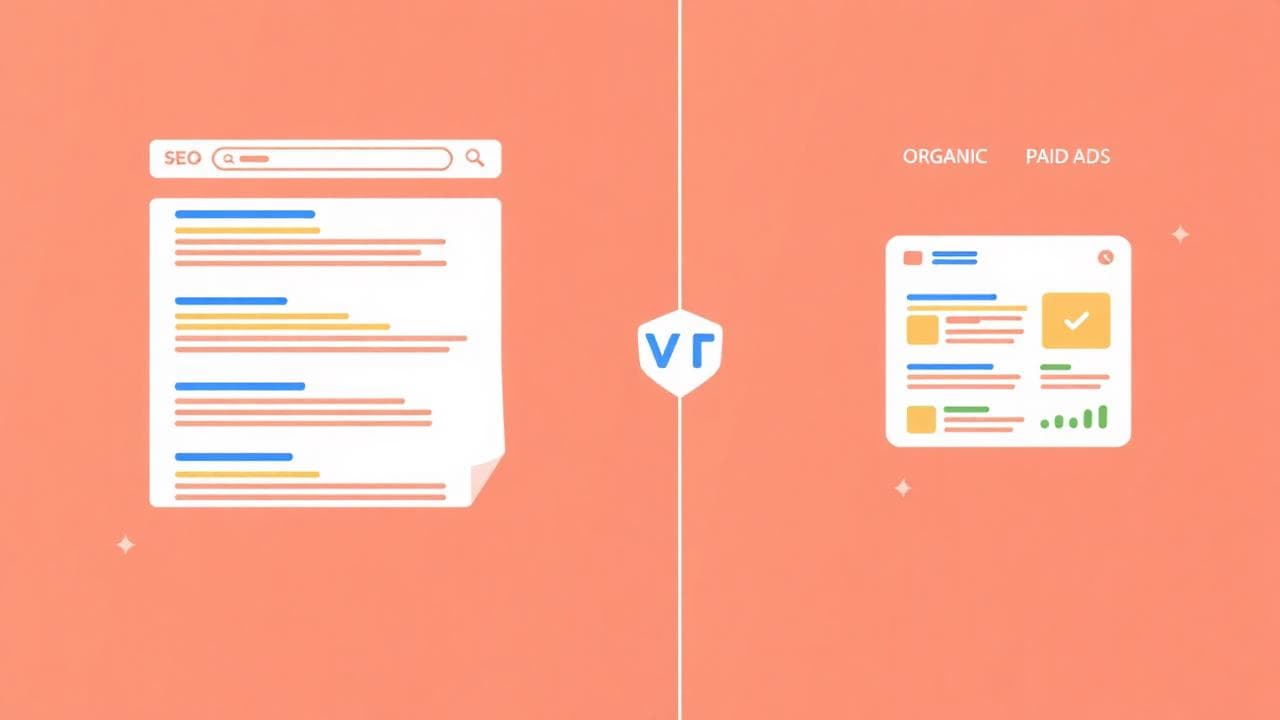
If you have looked into getting your business found on Google, you have probably come across two terms: SEO and Google Ads. They both aim to get your business in front of people searching for what you do, but they work in completely different ways.
Understanding the difference will help you decide where to put your time and money.
What is SEO?
SEO stands for Search Engine Optimisation. It is the process of making your website and online presence good enough that Google decides to show you in its free, organic search results.
When someone searches "electrician near me" and a list of results appears below the ads, those are organic results. Getting into those results is what SEO is about.
SEO involves things like:
- Making sure your website loads quickly and works on mobile
- Writing content that includes the words and phrases your customers are searching for
- Getting your Google Business Profile fully set up and optimised
- Earning genuine reviews from customers
- Making sure your business details are consistent across the internet
- Building links from other reputable websites to yours
The big advantage of SEO is that once you rank well, every click is free. You are not paying for each visitor. The downside is that it takes time — usually two to six months before you see meaningful results — and it requires ongoing effort to maintain your position.
What are Google Ads?
Google Ads (formerly Google AdWords) is Google's paid advertising platform. You pay to have your business appear at the very top of the search results, above the organic listings, when someone searches for specific keywords.
You choose which searches trigger your ad, set a daily budget, and pay each time someone clicks on your ad. This is called pay-per-click (PPC) advertising.
The big advantage of Google Ads is speed. You can set up a campaign today and be appearing at the top of Google by this afternoon. It is also highly targeted — you can show your ads only to people in your specific area, searching for your specific services.
The downside is cost. Every click costs money, typically between one and fifteen pounds depending on your industry and location. Once you stop paying, your ads disappear immediately.
How they compare
| | SEO | Google Ads | |---|---|---| | Speed | Slow (2-6 months) | Immediate | | Cost per click | Free once ranking | Paid per click | | Ongoing cost | Lower over time | Continuous spend | | Trust | Higher (organic feels more trustworthy) | Lower (people know it is an ad) | | Control | Less (Google decides your ranking) | More (you choose keywords and budget) | | Longevity | Long-lasting if maintained | Stops when you stop paying |
Which one should you choose?
For most small businesses, the best approach is to start with both, if your budget allows.
Start with SEO if you are thinking long-term and want to build a sustainable source of enquiries that does not require ongoing ad spend. SEO is the foundation — a good website, a strong Google Business Profile, and genuine reviews will serve you for years.
Start with Google Ads if you need customers now. If you have just launched, moved to a new area, or hit a quiet patch, ads can fill the gap while your SEO builds up.
Use both together for the best results. Run Google Ads for immediate visibility while investing in SEO for the long term. As your organic rankings improve, you can gradually reduce your ad spend.
Common mistakes
Paying for ads without a good website. If someone clicks your ad and lands on a slow, outdated website with no clear way to contact you, you have wasted that click. Fix your website first, then run ads.
Expecting instant results from SEO. SEO is a long game. If someone promises you page one in a week, they are either lying or using techniques that will get your site penalised by Google.
Setting up Google Ads and forgetting about them. Ads need regular monitoring and adjustment. Keywords that are too broad will eat your budget on irrelevant clicks. You need to review your campaigns weekly and refine your targeting.
Ignoring your Google Business Profile. Whether you are doing SEO or ads, your Google Business Profile is critical. It is free to set up and has a huge impact on local visibility.
The bottom line
SEO and Google Ads are not competitors — they are complementary tools. SEO builds your long-term presence and earns you free clicks. Google Ads give you immediate visibility when you need it. The best strategy for most small businesses is to invest in solid SEO foundations while using ads to generate leads in the short term.